

BRIEF HISTORY OF DLSP:
Patriotism. Leadership. Service. Professionalism.
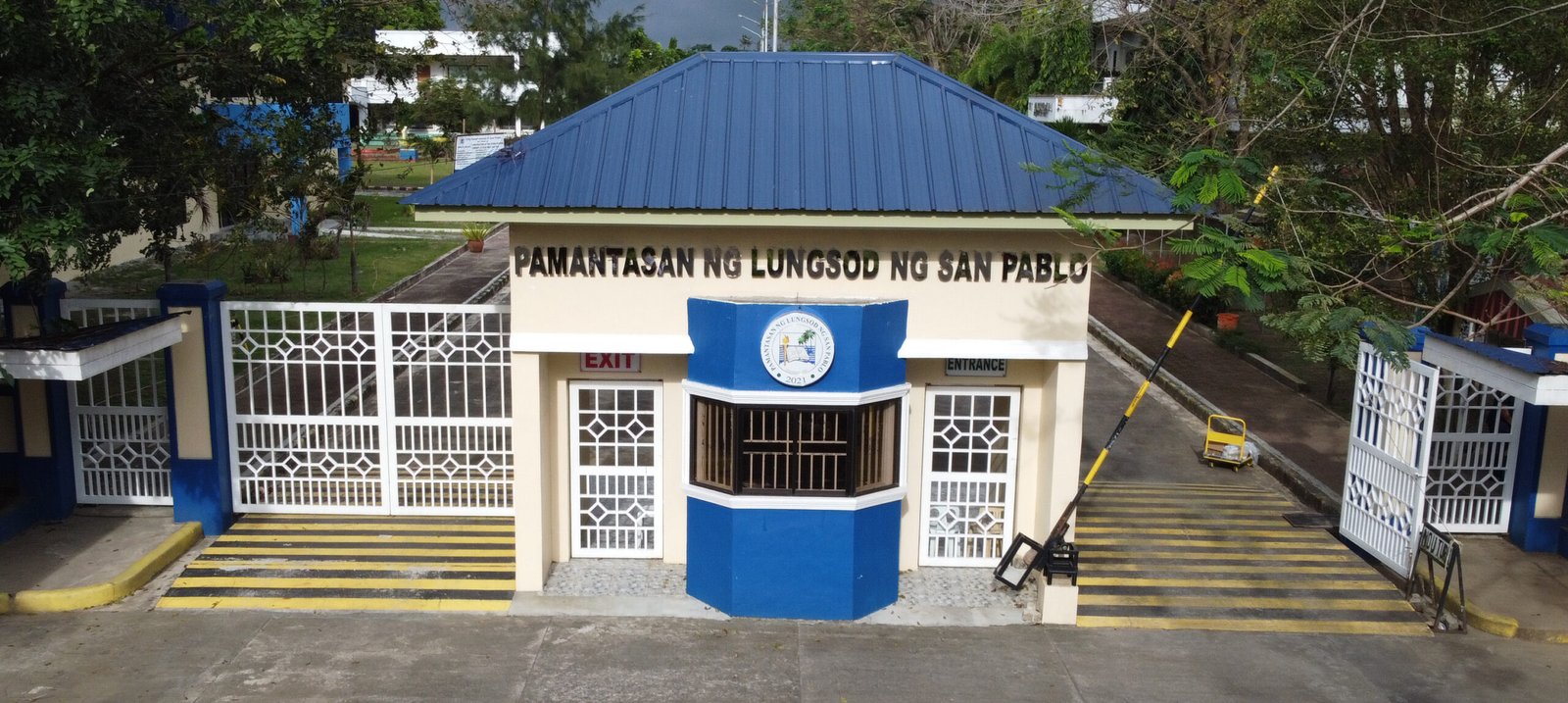
On June 15, 1997, the permit to operate the college was granted by the Commission on Higher Education, and gave DLSP the authority to start holding classes on July 2, 1997. (DLSP – Student Handbook, 2018)
March 19, 1997 marked the beginning where a public college was mentioned by Sangguniang Panlunsod Education Committee Chair then, Hon. Pablo O. Ticzon, during committee report in a regular session. He said that one of the cherished dreams of Hon. Mayor Vicente B. Amante was the establishment of a school for deserving but indigent children. He mentioned further that Mayor Amante was planning to open a public college immediately the following school year. There were about 400 underprivileged deserving students that were coming from public schools, hence, negotiation for a probable site of the school was being undertaken by the Mayor Vicente Amante himself. A lot was to be purchased as a permanent site intended for both the high school annex and the proposed college. When he learned that there were around 25-30 teachers who might be displaced because of some labor disputes with their employer then, he wanted immediately to address the problem. For him it was actually hitting two birds with one stone – opening a city college and hiring the teachers so, they will not be displaced.
Twenty-seven days after, on April 16, 1997, Ordinance No. 97-15 was enacted unanimously, an ordinance approving in principle the establishment of a college in the City of San Pablo.
A week later, on April 23, 1997 in the plenary, the proposed names of the college underwent lengthy deliberations, that eventually gave Asst. Majority Floor Leader, Hon. Eduardo O. Dizon, the opportunity to suggest, that the name of the city college be in the vernacular or Tagalog [Filipino] – “Dalubhasaan ng Lunsod ng San Pablo”, since the college was intended for the ordinary citizens, the laymen or the less privileged constituents of the city. Hon. Irineo Biglete, amenable to the suggestion made, reiterated that the name be made as such so as not to be mistaken with the name of an existing private college in the city.
May 20, 1997 can be considered a remarkable day under the administration of the Hon. Mayor Vicente B. Amante because finally the creation and establishment of the college was approved. The next day, May 21, 1997, the Sangguniang Panlalawigan ng Laguna during its regular session approved its establishment and operation. This was a dream come true for the father of San Pablo and founder of the city college, since he himself was not able to finish tertiary or college education. This even gave him more inspiration in establishing a city college for the city’s youth who come from underprivileged families. He firmly believes that education will always be the legacy that he can give his constituents and that is – DLSP, his brainchild. In barely three months, from the date of its conception to its actual operation, a tertiary educational institution was established and operated by the city government of San Pablo – DLSP. It offers college education at very minimal expense to deserving youth of the city and nearby towns and neighboring provinces.
In retrospection, Ordinance No. 97-15, pursuant to Art. 2 Section 458, No. 10 of Subsection 5 of the Local Government Code of 1991, was passed, authored by the then Chairman of the Committee on Education, Hon. Pablo O. Ticzon.
On June 15, 1997, the permit to operate the college was granted by the Commission on Higher Education, and gave DLSP the authority to start holding classes on July 2, 1997.
On November 3, 1999, the Sangguniang Panlunsod in its regular session amended Ordinance No. 97-15. In this ordinance (Ordinance No. 99-15) no mention was made about the Administrative Board but it provided that the Board of Trustees shall make its recommendations on policies of the college to the Sangguniang Panlunsod.
On September 10, 2001, the Sangguniang Panlunsod in its regular session amended Ordinance No. 97-15. The amended Ordinance (Ordinance No. 2001-27), authored by the Hon. Councilor Edgardo D. Adajar, provides that the Board Trustees is still the policy-making body.
THE DLSP CULTURE:
University Quality Policy
The Pamantasan ng Lungsod ng San Pablo commits to sustainable quality education adhering to the highest standards of excellence in instruction, research, extension, production, and administrative services by upholding a continuous quality management system for client satisfaction through employee and student development anchored on constitutional mandates, statutory, and regulatory requirements while promoting a God-loving, safe, and green environment for all.
University Philosophy
The Pamantasan ng Lungsod ng San Pablo is deeply committed towards the integral formation of the human person, with a profound faith in God, in his fellow men and himself by providing its students the full development of their physical, intellectual, social and cultural endowment for effective participation in various professions and industrial occupations and to enable them to enjoy reasonable quality of life to be able to contribute to the upliftment of the human society.
University Vision
The Dalubhasaan ng Lunsod ng San Pablo envisions itself as a Center of Excellence in 2035, upholding glocally-responsive education dedicated to transform lives and empower communities.
University Mission
The Dalubhasaan ng Lunsod ng San Pablo mission statement is to create a learning community that generates God-loving and holistic graduates prepared for civic engagement and academic and life success by strengthening and synergizing instruction, research and extension, administration and student development.
Core Values
PATRIOTISM
LEADERSHIP
SERVICE
PROFESSIONALISM
Goals
1. University and Academic Excellence.
2. Sustainable Linkages and Community Engagement Programs.
3. Relevant and Responsive Governance.
4. Strengthened University Research Culture.
5. Nurturing and Impactful Student Life and Success Program.
Objectives
1. To provide relevant knowledge and to develop the skills, competencies, habits, attitudes and values of the students that are required in the chosen profession.
2. To advance human knowledge through study and research.
3. To give professional training in scientific, cultural, technological, industrial and vocational fields.
4. To mold students to become professionally competent, creative, and capable of making free, morally upright choices and decisions and serve as positive agents of change in their respective community.
5. To provide opportunities for personal growth in leadership and community building through a network of student curricular, extra and co-curricular activities as well as human resource development programs for continuous growth of students, faculty and staff.